
The UFC Replaced Human Rankings With an Algorithm: Here's Why That Matters
The UFC launched Meta UFC Rankings on Monday, replacing the media voting panel with an Elo style algorithm built with Meta. The old system was broken and everybody knew it. The new one is mathematically better. The question is whether the UFC will actually follow its own rankings when McGregor wants a title shot.
John Brooke
June 24, 2026
The UFC's media panel rankings have been a joke for years and everybody knew it.
Random writers nobody has heard of voting on fighter rankings every week. Inactive fighters sitting in the top 10 for months because nobody bothered to drop them. Inconsistent movement from week to week that made zero sense. Fighters ranked in divisions they hadn't competed in for over a year. Dana has been complaining about it publicly since 2024. Fans have been complaining about it longer than that.
On Monday the UFC officially launched the Meta UFC Rankings. Built in partnership with Mark Zuckerberg's Meta. An Elo style rating system that evaluates fighters entirely on fight data. No media voters or human opinions, just math.
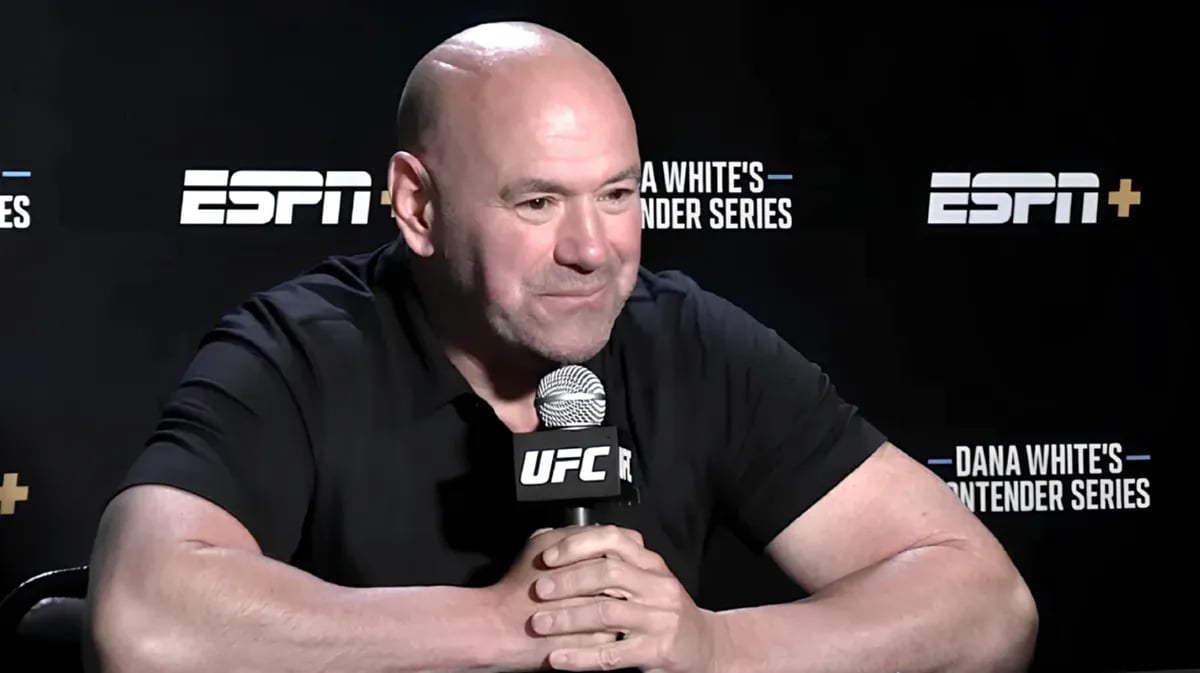
"I've been unhappy with the rankings and always believed there had to be a better way," Dana said. "We've always been a company that runs toward technology and innovation and now we've worked with Meta to integrate it directly into our rankings system."
The old system needed to go. That part everybody agrees on. Whether the new one actually changes anything is the question nobody is answering yet.
How It Actually Works
Despite Dana calling it "AI rankings" for months, CBS Sports clarified after the launch that the active system does not actually use artificial intelligence. Machine learning was used to design and test the model (they tested about 50 different versions before selecting the final one) but the product that's live on the website is an algorithm. Inputs go in, math happens, numbers come out.
The inputs are what matter. The system evaluates fighters based on who they beat, how they beat them, how recently they did it, and how often they compete. A first round KO over a top 5 opponent carries significantly more weight than a split decision over an unranked fighter. Recent wins matter more than old ones. Fighters who stay active get rewarded. Fighters who sit out get penalized.
That last part is the biggest change. Under the old media panel, a fighter like Conor McGregor could sit out for five years and still be discussed as a ranked contender because the media voters kept him in the conversation based on name recognition. Under the Meta system, inactivity has a mathematical penalty. If you don't fight, your number drops. Period.
Rankings update automatically every Monday after each UFC event. No panel meetings where someone argues that a fighter who hasn't won in two years still deserves a #8 ranking because they used to be good.
The Launch Was a Mess
Because this is the UFC, the rollout was obviously not smooth.
When the new rankings went live on Monday morning, the website was broken. Champions were replaced by unranked fighters in some divisions. Weight classes were missing contenders. Random names appeared in spots that made no sense. MMA journalist Adam Martin posted a screenshot and said "it looks like the website is broken."
It was. They fixed it by Tuesday afternoon. But the first impression of the new "data driven" system was a website that couldn't even display the data correctly.
Once the bugs were worked out, the actual rankings created some interesting conversations. Pat Sabatini showed up as a top 10 featherweight which shocked a lot of people. Raoni Barcelos landed in the bantamweight top 10. Ryan Spann and Navajo Stirling, who were unranked under the media panel, suddenly had numbers next to their names. And some established fighters like Robert Whittaker and Derrick Lewis found themselves dropped entirely from the new rankings despite still appearing in the media version.
Here's the detail that connects to something we wrote recently. One of the approximately 50 test models had Melquizael Costa ranked AHEAD of Arnold Allen before their UFC Vegas 117 main event. Allen was #7 on the media rankings. Costa was #13. But the algorithm looked at Costa's recent trajectory (six straight wins, four finishes, first round stoppages) and valued that consistency more than Allen's overall body of work.
Whether that's better or worse than the media ranking depends on what you think rankings should measure. Momentum or career? The algorithm chose momentum.
No More Pound for Pound
The Meta Rankings launched without a pound for pound category. The P4P list was always the most subjective part of the old system because you're asking people to compare fighters across different weight classes who will never actually fight each other. Islam Makhachev at #1 P4P makes sense on paper but how do you mathematically compare him to Jon Jones or Pereira when they fight at completely different weights against completely different opponents?
You can't. Not with one model. The UFC said a separate P4P model would require a completely different framework. So for now, it doesn't exist.
Honestly that might be the most honest thing about the new system. Instead of pretending they can objectively rank fighters across weight classes (they can't, nobody can), they just admitted the math doesn't work for it and dropped it.
The Real Question
Here's where I'm going to say what everybody is thinking but nobody with a UFC press pass wants to say.
It doesn't matter how good the rankings are if the UFC ignores them when it's convenient.
Yahoo Sports nailed this in their breakdown. "Those precious little numbers only seemed to matter when UFC matchmakers wanted them to. When managers attempted to use them to make a case, then the importance vanished in a hurry."
Remember when Tsarukyan was the #2 ranked lightweight and couldn't get a title shot? Remember what Dana said? "I don't give a sh** what the number says. He's going to have to work his way back."
That was under the old system. But the attitude is what matters, not the technology behind the ranking. If the UFC is willing to look at a #2 ranked fighter and say "I don't care what the number says," then it doesn't matter whether a human or an algorithm generated that number. The result is the same. The ranking gets overridden by business decisions.
If McGregor beats Holloway at UFC 329 and wants a welterweight title shot, is the UFC going to check the Meta Rankings and say "sorry Conor, the algorithm says you need two more wins first"? Bro we all know the answer to that. McGregor gets the title shot because McGregor is McGregor. The algorithm can say whatever it wants.
The Meta Rankings are a better system than what they replaced. The math is more objective. The inputs are measurable. The human bias is removed from the calculation. All of that is genuine progress.
But rankings are only meaningful if the people making the fights actually follow them. And the UFC has a long, documented history of not doing that. Better technology doesn't fix a matchmaking culture that treats rankings as suggestions when a bigger name or a bigger fight is available.
What This Actually Changes
Okay so if the rankings don't determine matchmaking, what's the point?
Two things.
The first is fan engagement. The new system gives fans a clear, data-backed framework to argue about rankings instead of blaming anonymous media voters. "The algorithm says he's #4" is a better starting point for a conversation than "some random writer at a website you've never heard of voted him #4." It makes the debate more productive even if it doesn't make the outcomes different.
The second is fighter leverage. If a fighter is ranked #3 by the algorithm and gets passed over for a title shot in favor of someone ranked #7, the discrepancy is now mathematical instead of opinion-based. That makes it harder for the UFC to justify publicly. "The media panel had him ranked lower" is easy to defend because media opinions are subjective. "The data-driven model had him ranked higher but we went with the other guy anyway" is much harder to explain without admitting you're making business decisions over competitive merit.
The Meta Rankings won't force the UFC to be fair. But they will make it harder to pretend unfairness is justified.
The Bigger Picture
The UFC told fans to shut up about AI promos. Used AI to generate the White House promotional video including a fake version of Dana's own voice. Put 48 stars on the American flag because an AI didn't know what the flag looks like. Got roasted for all of it.
Now they're using machine learning for rankings. And this time it actually makes sense.
The AI promos were lazy. Replacing human creativity with automated content that nobody checked for accuracy. The Meta Rankings are the opposite. Replacing a broken human system with a mathematical model that measures real performance data. One was cutting corners. The other is solving a genuine problem.
Not every use of this technology is the same. Using automation to make promotional videos is lazy. Using it to build a ranking system that eliminates bias and rewards the fighters who actually show up and perform is smart. Both happened in the same organization in the same month. The difference is intent.
The UFC's ranking system needed an upgrade. The Meta Rankings are that upgrade. Whether the UFC actually listens to its own system is up to the humans who still run the promotion.
And if history is any guide, the algorithm might have the rankings right. But Dana will still have the final say.
Thanks for riding with CageLore. Stay locked in!
Related Articles

Usman Nurmagomedov Free Agency: UFC vs MVP and the Legacy Question
Usman Nurmagomedov is MMA's biggest free agent after finishing his PFL deal. He told Jake Paul to show him the money, but "Father's Plan" was written on UFC gold.

Jake Paul's MVP Merged With the PFL
Jake Paul's MVP merged with the PFL to form a nearly 400-fighter promotion built on higher pay.

Reinier de Ridder Quits Middleweight and Calls Out MMA's Weight Cutting Problem
Reinier de Ridder made 185 pounds six times in a year and his body gave out. Now he's done cutting for good, and calling out the weight-cutting problem MMA keeps ignoring.